

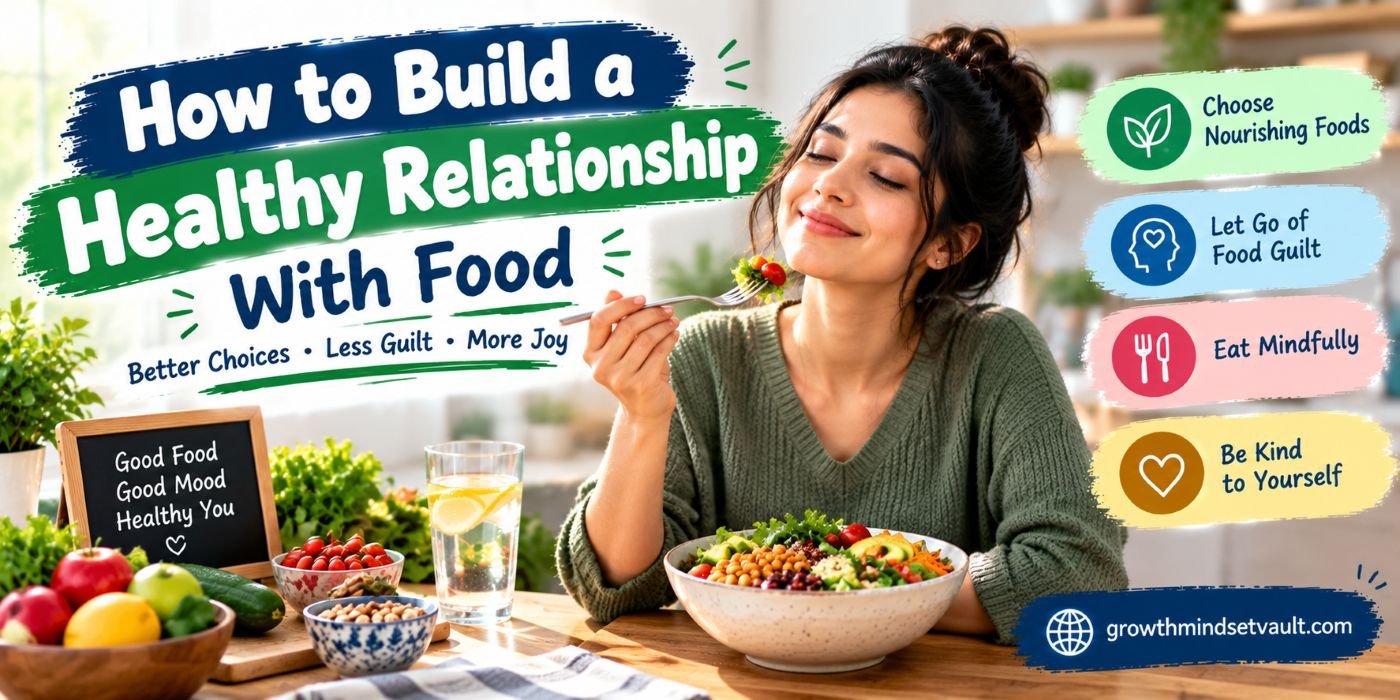
Food gives us energy, connects us with family, and brings enjoyment. Yet eating can feel stressful when you feel guilty after dessert or believe one meal has ruined your progress. A healthy relationship with food means making nourishing choices while leaving room for pleasure, culture, and flexibility.
You can build a healthy relationship with food through small, realistic changes—not strict rules. Over time, these choices can make a healthy relationship with food feel more peaceful and sustainable.
What Does a Healthy Relationship With Food Mean?
It means enjoying varied foods without constant fear or judgment. The World Health Organization’s healthy diet guidance highlights balance, moderation, adequacy, and variety. These principles can guide everyday choices.
One meal does not define your health. Your overall habits matter more than a single food choice.
7 Ways to Build a Healthy Relationship With Food
1. Stop Labelling Foods as Good or Bad
Calling foods “good” or “bad” can create food guilt. A slice of cake does not mean you have failed, just as one salad cannot guarantee good health. Look at your usual eating pattern instead.

Try replacing “I should never eat this” with “I can enjoy different foods as part of my routine.” This can support flexibility and a positive relationship with food.
2. Notice Hunger and Fullness
Hunger may feel like an empty stomach or low energy. Stress, medication, and health conditions can affect hunger and fullness signals.
Practise mindful eating by slowing down, noticing flavours, and taking comfortable pauses. If hunger cues are unclear, regular meals and snacks may help.
Mindful eating should make meals more comfortable, not become another rule. Health Canada’s guidance on eating mindfully offers practical ideas.
3. Make Nourishing Meals Flexible
Include vegetables, fruit, grains, protein foods, and fats in ways that suit your needs, budget, and preferences.
| Meal | Everyday example |
|---|---|
| Breakfast | Oats with fruit or eggs with toast |
| Lunch | Rice or roti with dal, vegetables, and curd |
| Snack | Fruit, nuts, yoghurt, or a favourite snack |
| Dinner | Beans, tofu, fish, or chicken with grains and vegetables |
These are examples. A balanced diet is about variety over time, not a perfect plate at every meal. Think about what is practical for you, rather than copying someone else’s routine. Your needs may change with your activity, health, and routine.
4. Respond to Food Guilt in Real-Life Situations
Imagine you usually bring lunch from home but have pizza with colleagues. Afterwards, you think, “I have ruined my diet. I must skip dinner.” Remind yourself that one lunch does not cancel your usual habits. Eat your next meal as usual instead of compensating.
Family meals can bring pressure too. If someone comments on your plate or offers more food, you can say, “Thank you, that was lovely; I’m comfortable for now.” If comments continue, change the subject or sit beside someone who makes you feel comfortable. You can appreciate the person offering food without eating more than you want. You do not need to defend every choice.
During celebrations, enjoy foods that matter to you. On stressful days, ask what you need: food, rest, a break, or someone to talk to. Food can comfort you, and other coping options can help too.
5. Understand Emotional Eating Without Blaming Yourself
People sometimes eat when bored, lonely, worried, or upset. This is not a character flaw. If you notice a pattern, ask what might help: a snack, a call with a friend, a break, or writing down your worries.
You do not have to choose a non-food activity every time. The goal is to understand emotional eating and your needs, not create more rules. A positive relationship with food allows enjoyment while helping you notice when emotions influence your choices.
6. Question Food Advice on Social Media
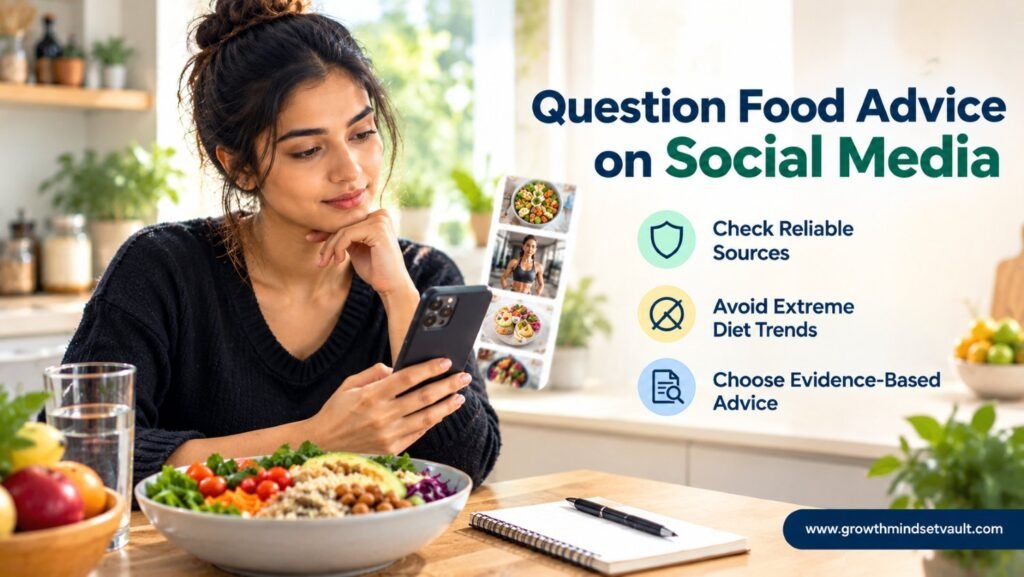
Online posts can promote rigid diets, unrealistic body images, or misleading claims about food. Comparing your meals with edited content can increase anxiety.
Check whether advice comes from a qualified professional or a reputable health organisation. Be cautious of instant-result promises and unnecessary restrictions. Unfollow accounts that make you anxious.
7. Choose Consistency Over Perfection
Your routine should work on busy days, during travel, and at family events. Keep convenient foods available and return to your usual pattern after an unusual day.
| Unhelpful pattern | More supportive response |
|---|---|
| Skipping meals to compensate | Return to your usual eating routine |
| Feeling guilty after a treat | Enjoy it without self-punishment |
| Following every diet trend | Check the evidence and your needs |
| Expecting instant change | Build one manageable habit at a time |
Consistency means choosing habits that support you over time.
When Should You Seek Support?
If worries about food, weight, or body shape regularly cause distress, speak with a registered dietitian or qualified mental health professional experienced in eating concerns. Persistent restriction, binge eating, or compensatory behaviours deserve support.
Final Thoughts
Building a healthy relationship with food takes time. Start by easing guilt, allowing flexibility, and choosing habits that fit your life. A healthy relationship with food leaves room for real life. You do not need perfect meals to care for yourself, and you do not need to earn the right to enjoy food.
At GrowthMindset Vault, we share practical guidance on healthy habits, mindset, and personal growth to help you build a healthier everyday life.