

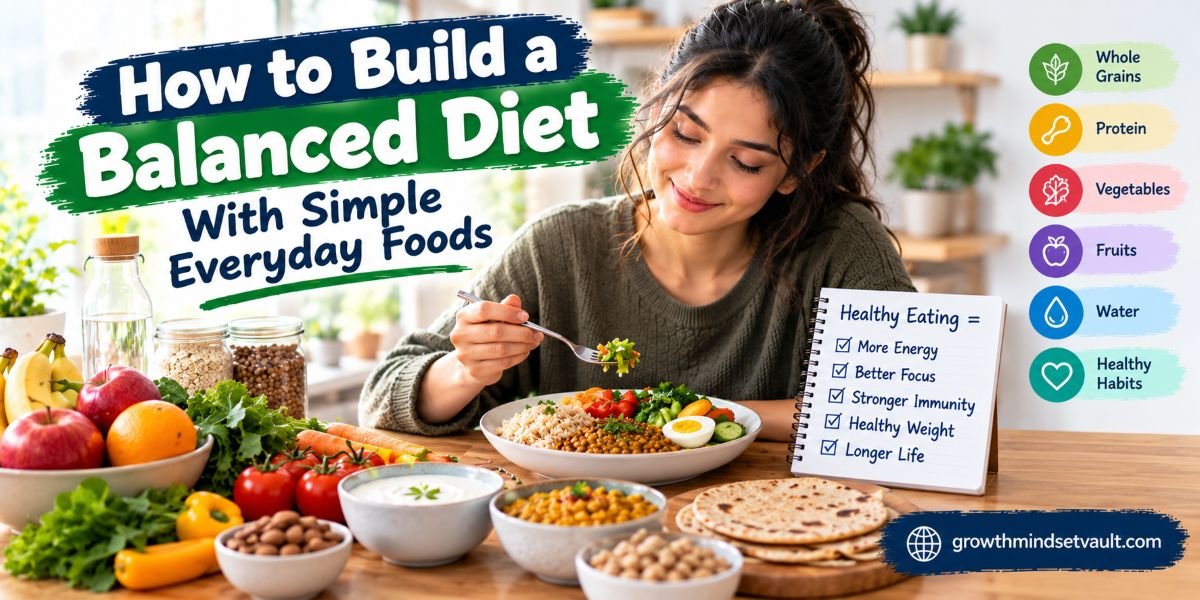
Healthy eating needs no costly ingredients or strict meal plan. Dal, roti, rice, beans, vegetables, fruit, eggs, and curd can all fit. Learning how to build a balanced diet means choosing variety, sensible portions, and a routine you can maintain.
What Is a Balanced Diet?
A balanced diet supplies carbohydrates, protein, fats, vitamins, minerals, and fibre. These nutrients support energy, tissue repair, and normal body functions. The World Health Organization’s healthy diet guidance highlights variety, balance, moderation, and food safety.
Your needs depend on age, activity, health, and preferences. The goal is not perfection; it is making nourishing choices most of the time.
How to Build a Balanced Diet in Five Steps
A few repeatable choices can help you build a healthy diet without complicated rules.
1. Include Different Food Groups
Include vegetables, fruit, whole grains, and protein-rich foods daily. Harvard’s Healthy Eating Plate offers a helpful visual guide: fill about half your plate with vegetables and fruit, and divide the other half between whole grains and healthy protein. Treat these proportions as a guide, not a medical prescription.
Pair roti or rice with dal, vegetables, and curd for greater variety.
2. Choose Affordable Everyday Foods
You do not need costly “superfoods” to build a healthy diet. Try oats, lentils, chickpeas, seasonal produce, eggs, and whole-wheat flour. Frozen vegetables and canned beans save time.
Plan meals before shopping and compare prices. Use leftovers for lunch when stored and reheated safely.
3. Include Protein Regularly
Protein supports tissue repair and growth. Sources include dal, rajma, chickpeas, eggs, milk, curd, tofu, and peanuts. Vary plant proteins.
Serve rice with rajma and vegetables instead of rice alone. It is a simple way to make the meal more varied without buying special products.
4. Eat a Variety of Fruits and Vegetables
Variety is one of the simplest principles to remember when learning how to build a balanced diet. Fruits and vegetables provide fibre, vitamins, and minerals. Choose different colours through the week. Bananas, guavas, carrots, spinach, tomatoes, and cabbage fit a simple healthy diet.
Frozen produce is also convenient. Choose canned foods with little added salt or sugar.
5. Drink Water and Notice Your Hunger
Small, steady habits make it easier to build a healthy diet over time. Drink water regularly unless advised to limit fluids. Eat at a comfortable pace and choose suitable portions.
Everyday Foods for a Balanced Diet
Use these everyday options when planning how to build a balanced diet.
| Food group | Affordable examples | Easy way to use them |
|---|---|---|
| Grains | Oats, roti, rice | Breakfast or main meals |
| Protein | Dal, beans, eggs, tofu | Add to lunch or dinner |
| Vegetables | Spinach, carrots, cabbage | Mix into curries or serve as a side |
| Fruits | Bananas, guavas, oranges | Breakfast or snacks |
| Healthy fats | Nuts, seeds, vegetable oils | Use sensible portions |
| Dairy or alternatives | Milk, curd, fortified alternatives | Choose options that suit your needs |
Choose foods that fit your budget, preferences, allergies, and needs.
A Simple Weekly Shopping and Meal Plan
Start with one or two grains, two protein sources, seasonal vegetables, and fruit. A list might include oats, rice or atta, dal, chickpeas, eggs or tofu, curd, bananas, carrots, and tomatoes. Swap based on local prices.
| Meal | Example | Simple swap |
|---|---|---|
| Breakfast | Oats with milk and banana | Roti with egg or tofu |
| Lunch | Roti, dal, vegetables, and curd | Rice with beans and vegetables |
| Snack | Guava with a few peanuts | Any seasonal fruit |
| Dinner | Rice, chickpea curry, and vegetables | Dal with roti and greens |
These easy balanced meals show how to combine familiar ingredients. Plan easy balanced meals around what is available. Adjust portions for your appetite, culture, budget, and health.
Save time: Wash vegetables and cook grains or pulses ahead. Refrigerate leftovers promptly and reheat thoroughly. Planning makes a simple healthy diet easier on busy days.
Common Mistakes to Avoid
Keep your simple healthy diet flexible enough for real life.
- Buying expensive health products: Basic foods can provide plenty of nutrients.
- Cutting out food groups without a reason: This can make it harder to meet nutritional needs.
- Following extreme diets: Very restrictive plans may be difficult to maintain.
- Eating the same few foods daily: Variety helps broaden the nutrients you get.
- Expecting instant results: Small changes are easier to repeat and maintain.
Start by adding vegetables to lunch or planning breakfast ahead. Add another change when it feels routine.
Frequently Asked Questions
Can I eat well on a small budget?
Yes. Use rice, whole-wheat flour, lentils, beans, eggs, and seasonal produce. A shopping list can help control spending.
Do I need to stop eating rice or roti?
No. Both can fit into a balanced eating pattern when you plan how to build a balanced diet. Pair them with vegetables and protein-rich foods for greater variety.
How do I keep healthy eating simple?
Choose affordable foods you enjoy, prepare ingredients ahead, and repeat meals that work. A simple healthy diet should fit real life, not make it harder.
Final Thoughts
Learning how to build a balanced diet is about practical choices you can repeat. To build a healthy diet, include different food groups, choose affordable ingredients, drink water, and plan meals that fit your routine. You can build a healthy diet without chasing perfection.
For beginners, how to build a balanced diet starts with one meal at a time.
At GrowthMindset Vault, we believe small, consistent actions support lasting progress. Explore our Health and Nutrition resources for more practical ideas to develop healthier daily habits.
This article offers general nutrition information, not individual medical advice. If you have a medical condition or specific dietary needs, consult a qualified healthcare professional or registered dietitian.