

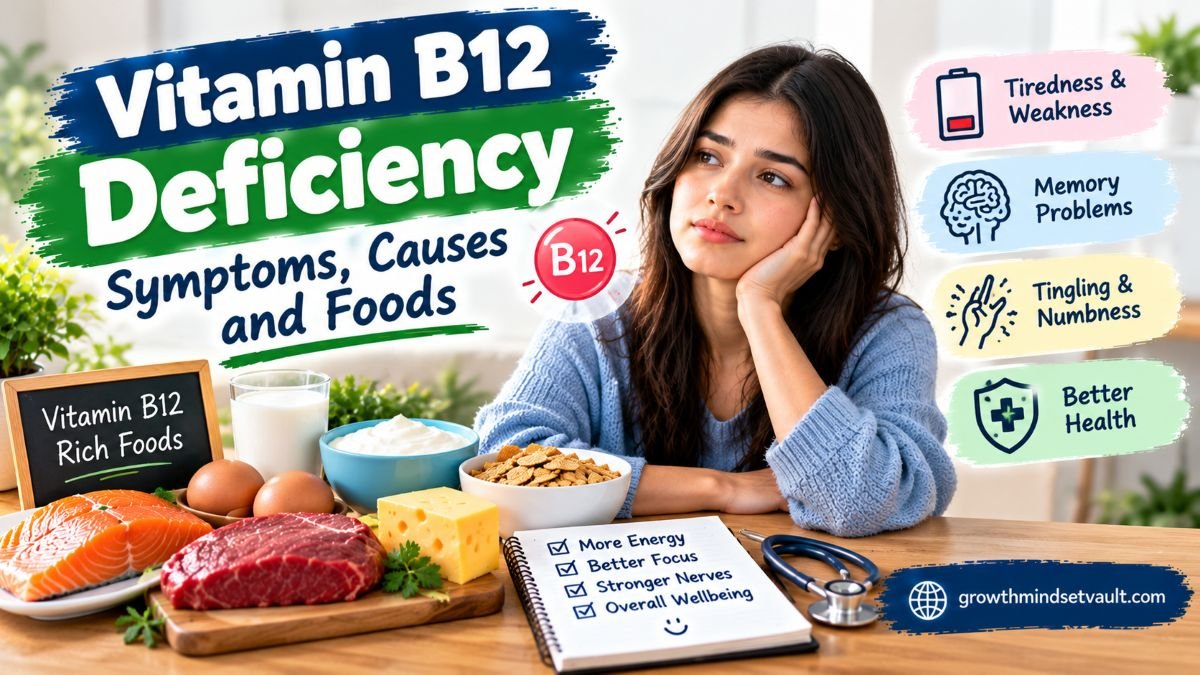
Introduction
Do you often feel tired, weak, or unable to concentrate, even after getting enough rest? These problems can have several causes, including a lack of vitamin B12. This nutrient helps your body produce healthy red blood cells, maintain nerve function, and make DNA.
Recognizing vitamin B12 deficiency symptoms early is important because untreated deficiency can sometimes cause lasting nerve damage. This guide explains the warning signs, common causes, helpful foods, and when to seek medical advice.
Common Vitamin B12 Deficiency Symptoms
These symptoms can develop gradually and vary from person to person. Some people mainly feel tired, while others notice changes affecting their nerves, memory, or balance.
| Symptom | What you may notice |
|---|---|
| Tiredness and weakness | Feeling exhausted or having little energy |
| Pale skin | Looking paler than usual |
| Tingling or numbness | Pins and needles in your hands or feet |
| Sore tongue | A red, smooth, or painful tongue |
| Memory problems | Difficulty concentrating or remembering things |
| Balance problems | Feeling unsteady while walking |
| Shortness of breath | Becoming breathless during everyday activities |
These signs of vitamin B12 deficiency can also occur with other conditions. Symptoms alone cannot confirm a diagnosis, and nerve-related problems may occur even without anaemia.
If you experience persistent tiredness, unexplained tingling, or balance changes, speak with a healthcare professional. Read the NHS guide to B12 deficiency symptoms for more information.
What Causes Vitamin B12 Deficiency?
The causes behind vitamin B12 deficiency symptoms are not always related to diet. Your body must absorb the vitamin properly, and several factors can interfere with this process.
Common causes of vitamin B12 deficiency include:
- Low dietary intake: People following vegan or restrictive vegetarian diets may need fortified foods or suitable supplements.
- Pernicious anaemia: This autoimmune condition affects the body’s ability to absorb vitamin B12.
- Digestive conditions: Coeliac disease and some other digestive problems can interfere with absorption.
- Certain medicines: Long-term use of metformin or some acid-reducing medicines may affect B12 levels.
- Stomach or intestinal surgery: Some procedures can reduce absorption.
- Age-related changes: Some older adults have difficulty absorbing B12 from food.
Understanding the causes of vitamin B12 deficiency helps you choose the right next step. If absorption is the problem, eating more foods rich in vitamin B12 may not be enough.
Best Vitamin B12 Foods to Include in Your Diet
Vitamin B12 occurs naturally mainly in animal-based foods. Some plant-based products contain it because manufacturers add the vitamin during processing.
| Food | Why it helps |
|---|---|
| Fish, including salmon | Provides B12 and protein |
| Meat and poultry | Natural sources of B12 |
| Eggs | A convenient source |
| Milk, yoghurt, and cheese | Provide B12 and other nutrients |
| Fortified breakfast cereals | May contain added B12 |
| Fortified plant-based milk | Useful for people avoiding dairy |
| Fortified nutritional yeast | Provides B12 if listed on the label |
These vitamin B12 rich foods can help you meet your nutritional needs, but not every cereal, plant-based milk, or nutritional yeast product contains B12.
Practical tip: Check the nutrition label for the amount of vitamin B12 per serving. Fortified products can contain different amounts, and some contain none. Check the serving size too, so you know how much B12 you will actually get.
If you follow a vegan diet, ordinary fruits, vegetables, beans, lentils, and unfortified grains are not reliable sources of vitamin B12. Choose reliably fortified products or ask a healthcare professional about suitable supplements.
The NIH vitamin B12 fact sheet provides more information about food sources and daily requirements.
How Is Vitamin B12 Deficiency Diagnosed?
When vitamin B12 deficiency symptoms persist, a healthcare professional may review your diet, medical history, medicines, and symptoms before recommending blood tests.
Blood tests can measure your B12 level and check for anaemia. Your clinician should interpret the results alongside your symptoms, medical history, diet, and medicines rather than relying on one result alone. If the result is unclear, additional tests may help confirm a deficiency or identify its cause.
Low B12 symptoms can also be caused by other conditions, including iron deficiency, thyroid problems, and poor sleep. Avoid self-diagnosis and seek medical advice if symptoms persist.
Medical safety note: Get prompt medical assessment for new or worsening numbness, difficulty walking, balance problems, or vision changes. Neurological complications can sometimes become permanent if treatment is delayed. Do not rely on dietary changes alone when a deficiency is suspected.
How Is B12 Deficiency Treated?
B12 deficiency treatment depends on the cause and severity. A healthcare professional may recommend tablets, injections, or dietary changes.
If low intake is responsible, supplements and a better-planned diet may help. If your body cannot absorb B12 properly, injections or ongoing treatment may be needed. Follow your clinician’s advice about treatment and follow-up testing rather than assuming food alone will correct a diagnosed deficiency.
Frequently Asked Questions
What are the first vitamin B12 deficiency symptoms?
Early vitamin B12 deficiency symptoms may include tiredness, weakness, a sore tongue, or tingling in the hands and feet. Symptoms vary, and a blood test may be needed to identify the cause.
Can vitamin B12 deficiency be corrected through food?
Sometimes. If low intake is the cause, B12-rich or fortified foods may help. Absorption problems may require supplements or injections.
Who is more likely to have low B12 levels?
People who eat little or no animal-based food, some older adults, and people with certain digestive conditions or previous stomach surgery may be at greater risk.
Final Thoughts
Recognizing vitamin B12 deficiency symptoms can help you take the right next step. Persistent tiredness, tingling, balance changes, and other unusual symptoms should not be ignored, although they can have many causes.
Include suitable vitamin B12 foods in your diet, check labels on fortified products, and seek medical advice if you suspect a deficiency. The right treatment depends on why your B12 level is low.
At GrowthMindset Vault, we share practical guidance to help you build healthier habits and make informed everyday choices. Explore our wellness content to keep learning and improving your wellbeing.