

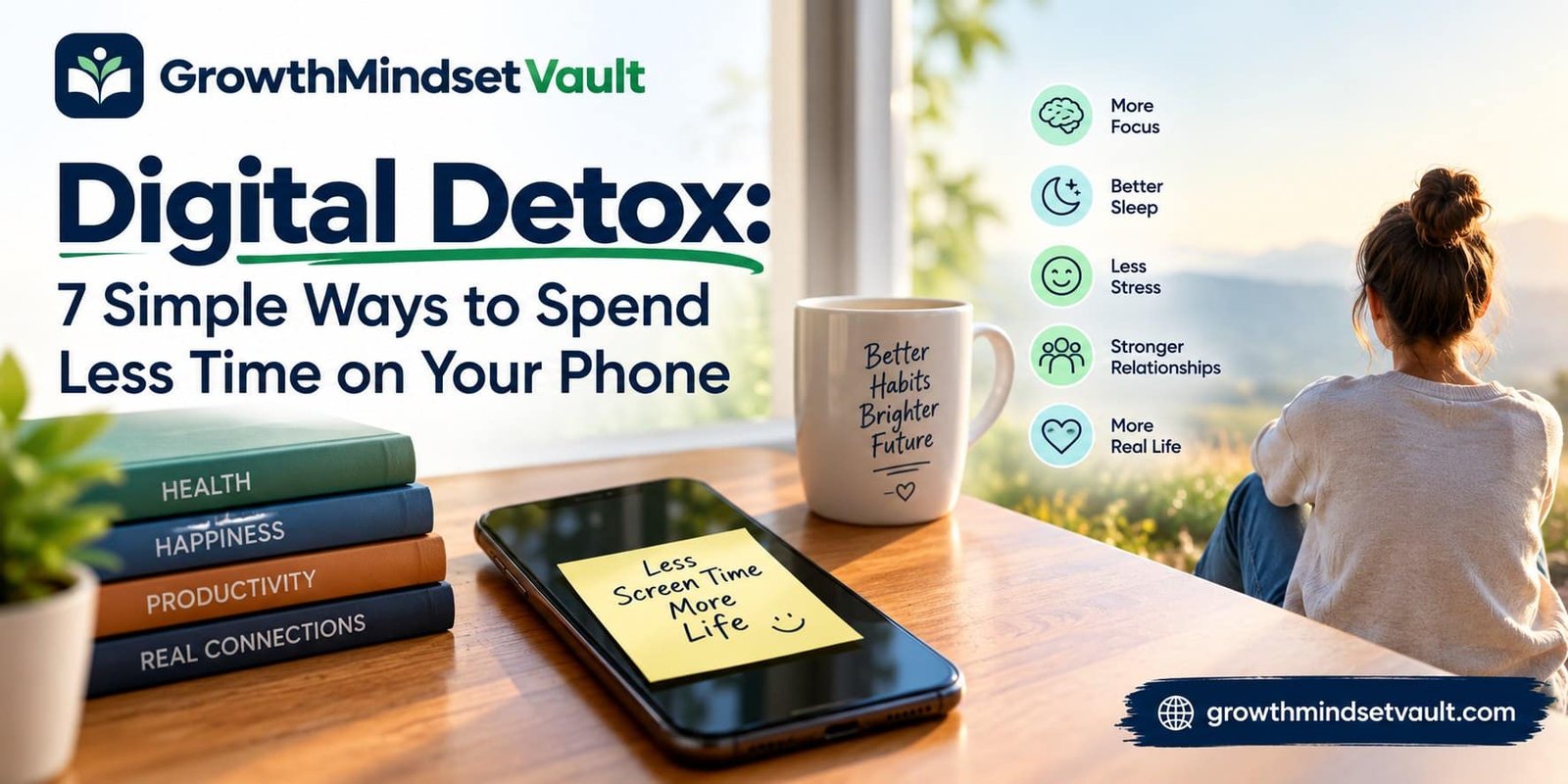
Your phone can help you learn, communicate, work, and stay connected. But when checking it becomes automatic, it can quietly take time away from sleep, study, work, hobbies, and real conversations.
A digital detox does not mean giving up technology completely. It means becoming more intentional about when and why you use your devices.
Research supports this balanced approach. A 2024 systematic review and meta-analysis of 26 studies involving 8,147 participants found that digital detoxification interventions were associated with improvements in subjective and psychological well-being, although results varied between studies.
What Does Digital Detox Mean?
The digital detox meaning is simple: intentionally reducing unnecessary digital use or creating planned boundaries around technology.
A phone detox might mean spending less time on social media, turning off unnecessary notifications, or keeping your phone away during important activities.
A phone cleanse does not have to mean avoiding your phone for an entire day. Small changes that fit your daily routine can be easier to maintain.
Digital Detox vs. Normal Phone Use
| Approach | Example | Main Goal |
|---|---|---|
| Normal phone use | Checking apps whenever you feel bored | Convenience |
| Phone detox | Creating planned phone-free periods | More control |
| Digital detoxification | Reducing unnecessary digital activities | Better habits |
| Healthy phone use | Using technology intentionally | Balance |
7 Simple Ways to Start a Digital Detox
1. Turn Off Unnecessary Notifications
Notifications give you another reason to check your phone.
Keep alerts for important calls and messages, but consider turning off notifications from social media, shopping, games, and other non-essential apps.
Fewer interruptions make it easier to control when you check your phone.
2. Create Phone-Free Times
Choose a few activities where your phone stays away.
Good examples include:
- During meals
- While studying or working
- During conversations
- While doing a hobby
- Before going to bed
This simple phone detox strategy creates boundaries without requiring you to stop using technology.
3. Make Distracting Apps Less Visible
Your phone’s design can influence your smartphone habits.
Move distracting apps away from your home screen or place them inside a folder. You can also check your screen-time report to see which apps take the most time.
The goal is not to feel guilty about using an app. It is to make mindless checking less automatic.
4. Replace Scrolling With Something Useful
Simply removing your phone can leave you looking for another source of entertainment.
Instead, replace scrolling with something you enjoy:
- Reading
- Walking
- Journaling
- Learning a skill
- Talking with family
- Doing a hobby
This makes a digital detox more sustainable because you are replacing a habit instead of simply removing it.
5. Keep Your Phone Away From Your Bed
A phone beside your bed makes late-night checking easy.
Try charging it away from your bed and create a short screen-free time before sleeping.
This can also support better sleep habits. A National Sleep Foundation expert consensus review published in 2024 found evidence supporting behavioral strategies around screen use and sleep, while also noting that the strength of evidence varies by age and situation.
6. Find Your Biggest Triggers
Do not only ask, “How much time do I spend on my phone?”
Ask:
When do I use it most? Which apps take the most time? What usually makes me start scrolling?
Maybe you reach for your phone when you are bored, stressed, waiting, or avoiding a difficult task.
Understanding the trigger makes digital detoxification much more practical because you can change the situation that starts the habit.
7. Start With a Small Phone Cleanse
You do not need an extreme 24-hour challenge.
Start with one phone-free hour in the evening. If that feels manageable, add another phone-free period during the day.
A phone cleanse should be realistic enough to repeat consistently.
Does Digital Detox Really Work?
The evidence is promising, but a digital detox is not a guaranteed solution for everyone.
A 2025 meta-analysis of 20 randomized controlled trials found a small positive effect of social-media detox interventions on well-being. However, results differed across groups and intervention lengths.
Another 2024 review found that there is no single standard definition of digital detox and that reducing smartphone or social-media use may sometimes be more practical than completely stopping.
The practical lesson: aim for better control, not a completely phone-free life.
A Simple Digital Detox Plan
| Time | Action |
|---|---|
| Morning | Delay unnecessary phone checking |
| Study/Work | Keep your phone out of reach |
| Meals | Eat without scrolling |
| Evening | Take one phone-free hour |
| Night | Charge your phone away from your bed |
Final Takeaway
A successful digital detox is not about quitting technology. It is about creating healthier boundaries so your phone supports your life instead of constantly competing for your attention.
Start small. One phone-free meal, one focused work session, or one screen-free hour can be a useful first step toward healthier digital habits.
Explore More From GrowthMindset Vault
For more practical articles on mindset, health, habits, finance, and personal growth, explore GrowthMindset Vault for simple ideas to help you learn, grow, and improve every day.