

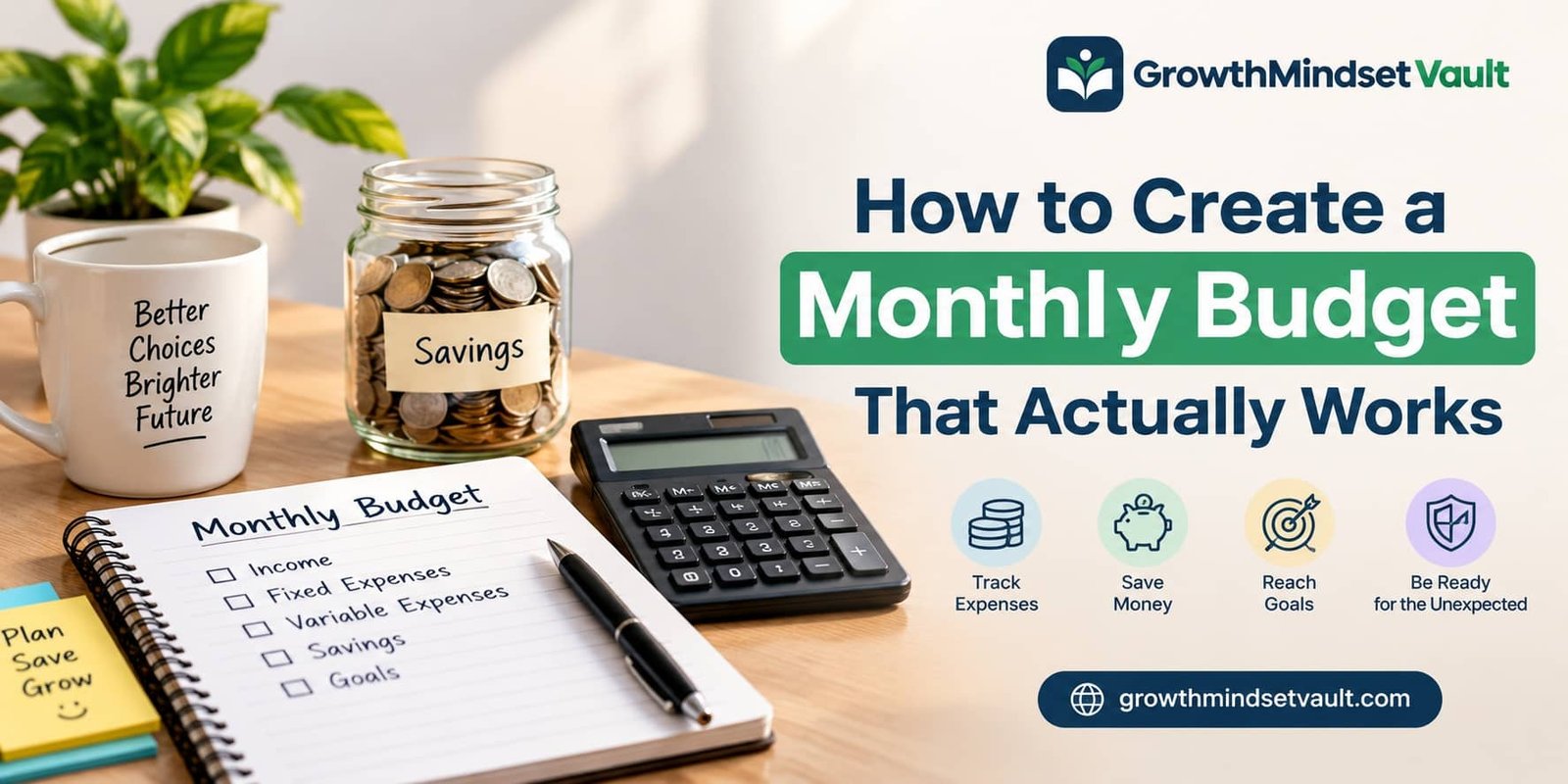
A monthly budget is a simple plan for how you will use your money each month. It helps you understand your spending, control unnecessary expenses, save for future goals, and prepare for unexpected costs.
The best budget is not the strictest one. It is one you can realistically follow.
You do not need a complicated spreadsheet. A simple system that you review every month can be enough.
What Is a Monthly Budget?
A monthly budget is a plan that shows how you will divide your income between expenses, savings, and financial goals.
A simple formula is:
Monthly Income − Expenses − Savings = Money Left
The Reserve Bank of India describes a budget as a tool for managing money, identifying unnecessary spending, improving savings, and preparing for unexpected expenses.
1. Calculate Your Monthly Income
Start by writing down how much money you expect to receive during the month.
This could include:
- Salary or wages
- Freelance income
- Business income
- Allowances
- Other regular income
If your income changes from month to month, use a realistic estimate instead of your highest possible income.
For example, if you can reliably expect ₹30,000, use ₹30,000 as the starting point for your budget.
2. List Your Fixed Expenses
Next, write down expenses that usually stay the same or change very little.
Examples include:
- Rent
- Loan payments
- Insurance
- Phone and internet bills
- Education fees
- Subscriptions
List these expenses first because they are usually harder to reduce quickly.
3. Track Your Variable Expenses
Variable expenses can change each month.
Common examples include:
- Groceries
- Transport
- Eating out
- Shopping
- Entertainment
- Personal expenses
Check your previous month’s spending instead of guessing.
This helps you see where your money actually goes and can reveal expenses that are easy to overlook.
4. Separate Needs From Wants
Not every expense has the same priority.
Needs are essential expenses such as housing, basic food, transportation, and healthcare.
Wants are things you enjoy but can usually reduce or postpone, such as eating out, entertainment, or non-essential shopping.
SEBI’s financial education material recommends prioritising needs before wants when managing expenses.
You do not need to remove every want from your budget. Give these expenses a reasonable limit instead.
5. Build a Simple Monthly Budget
Suppose your monthly income is ₹30,000:
| Category | Planned Amount |
|---|---|
| Housing | ₹8,000 |
| Food & Groceries | ₹5,000 |
| Transport | ₹3,000 |
| Bills | ₹2,000 |
| Savings | ₹5,000 |
| Personal Spending | ₹3,000 |
| Buffer | ₹4,000 |
| Total | ₹30,000 |
This is only an example. Your actual budget should reflect your income, responsibilities, and goals.
The important thing is to give your income a clear purpose before you start spending.
6. Make Savings Part of the Plan
Do not wait until the end of the month to see whether you have money left to save.
Instead, include savings in your budget from the beginning.
You might save for:
- An emergency fund
- Education
- A planned purchase
- A future goal
- Other long-term needs
SEBI’s financial education resources emphasise setting realistic, specific, and time-bound financial goals.
There is no single savings amount that works for everyone. Choose a realistic amount you can maintain consistently.
7. Plan for Irregular Expenses
Some expenses do not happen every month but can still disrupt your budget.
Examples include:
- Annual insurance
- Vehicle maintenance
- Gifts and festivals
- Course fees
- Travel
- Medical costs
If you know an expense will cost ₹12,000 over a year, you could plan for:
₹12,000 ÷ 12 = ₹1,000 per month
Planning ahead makes these expenses easier to handle.
8. Keep a Small Buffer
Your budget should have some flexibility.
A buffer is money kept aside for expenses you did not expect.
For example, if you earn ₹30,000 and your planned expenses and savings total ₹28,000, the remaining ₹2,000 can act as a buffer.
If you do not use it, you can move it toward savings or another goal.
9. Review Your Budget Every Month
Your first budget does not have to be perfect.
At the end of the month, compare:
Planned spending vs. Actual spending
Then ask:
- Where did I spend more than planned?
- Which expenses could I reduce?
- Did I save what I planned?
- Did I forget any expense?
- What should I change next month?
RBI recommends keeping budgeting simple and reviewing the budget monthly.
Common Budgeting Mistakes
Avoid these common mistakes:
Making the budget too strict: A plan with no room for normal spending can be difficult to maintain.
Ignoring small expenses: Frequent small purchases can add up.
Forgetting irregular costs: Annual and occasional expenses can suddenly affect your budget.
Copying someone else’s budget: Your income and responsibilities are different.
Not tracking actual spending: A budget becomes more useful when you compare it with what you really spent.
Frequently Asked Questions
How much should I save each month?
There is no universal amount. Consider your income, essential expenses, existing financial commitments, and goals. Choose an amount that is realistic and sustainable.
What if my expenses are higher than my income?
Review your expenses and identify what is essential, what can be reduced, and what can be postponed. You can then adjust your budget based on your actual situation.
Should savings be included in a monthly budget?
Yes. Including savings in your budget makes it a planned part of your money management instead of something you only do when money is left over.
How often should I review my budget?
Review it at least once a month. Also update it when your income, expenses, or financial goals change.
Final Takeaway
A monthly budget does not need to be complicated.
Start with your actual income, list your expenses, separate needs from wants, plan for irregular costs, include savings, and keep a small buffer.
Then review the results at the end of every month.
A good budget is not about spending as little as possible. It is about giving your money a clear purpose and making your spending work for your goals.
Explore More from GrowthMindset Vault
If you enjoy practical articles about mindset, health, personal growth, finance, and better everyday habits, visit GrowthMindset Vault for more simple and useful guides designed to help you learn, grow, and make better decisions.